




If your business depends on you constantly showing up live, it eventually starts to feel heavy.
Your calendar fills up. Your energy gets stretched thin. And even though your clients love your work, growth starts depending on how many hours you can personally give.
That’s why more coaches, consultants, and experts are learning how to build an automated webinar funnel.
A good webinar funnel helps you generate leads, build trust, and sell your offers without running live launches every month. It creates a system that keeps working in the background while you coach clients, create content, or simply step away from your desk for a few hours.
The best part is that it doesn’t need to be complicated.
What Is an Automated Webinar Funnel?
An automated webinar funnel is a sales funnel built around a pre-recorded webinar.
Instead of hosting a live webinar every week, your webinar presentation runs automatically through webinar automation software like WebinarJam and EverWebinar.
People register through a landing page, attend the webinar at a scheduled time, hear your presentation, and then receive follow-up emails that guide them toward your offer.
Most automated webinar funnels follow a simple flow:
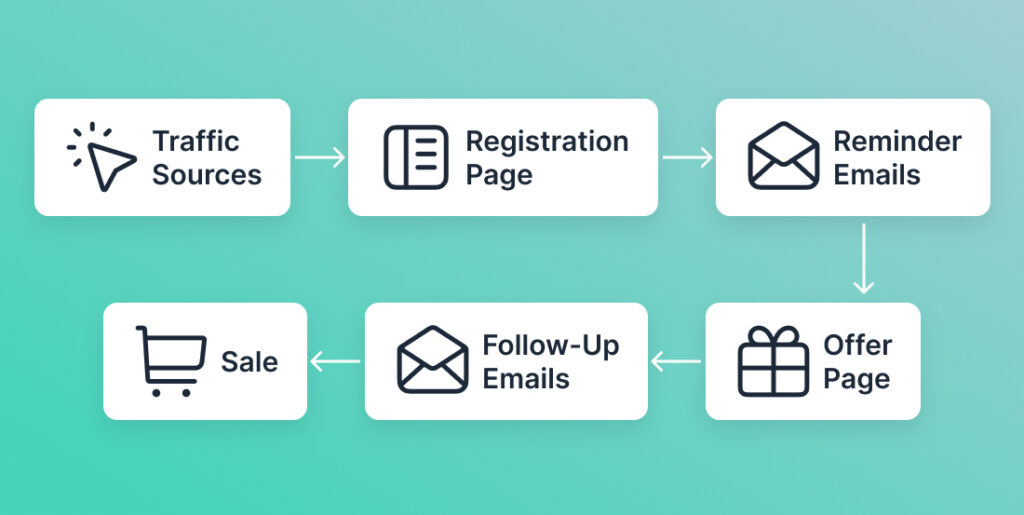
- Traffic from email, ads, YouTube, or social media
- Webinar registration page
- Confirmation and reminder emails
- Automated webinar presentation
- Offer or checkout page
- Follow-up email sequence
Unlike a live webinar, an evergreen webinar keeps running even when you’re offline.
That’s what makes it scalable.
Why Automated Webinar Funnels Convert So Well
Webinars work because they build trust faster than most marketing content.
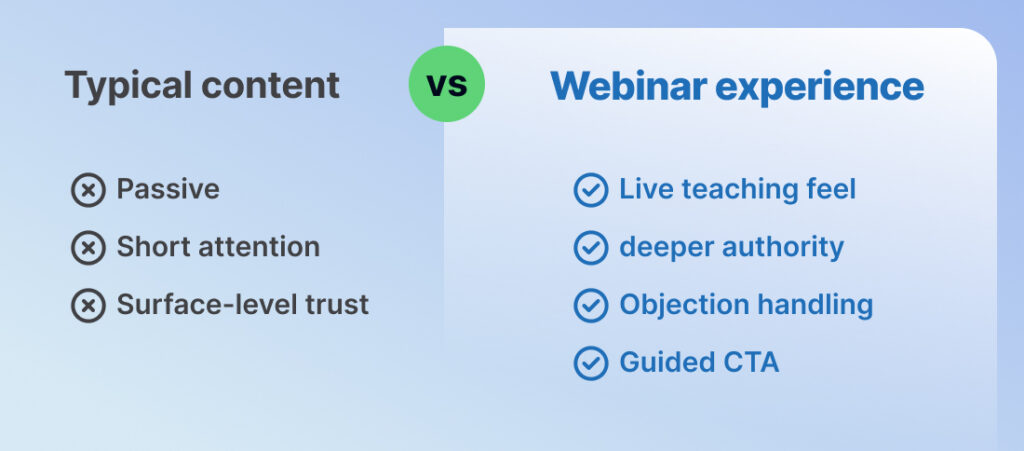
A blog post can educate someone. A webinar lets people experience your teaching style, hear your stories, and understand your process in real time.
That matters when you sell coaching, consulting, courses, or high-ticket offers.
For example, a financial advisor teaching retirement planning can use a webinar to simplify complex ideas and answer common objections before presenting a premium planning service.
A nutrition coach can walk people through a practical meal strategy before inviting them into a paid program.
The webinar itself becomes part education, part relationship-building.
Automation also creates consistency.
Instead of manually launching every few months, your webinar funnel keeps generating webinar registrations and sales opportunities automatically.
And contrary to what many people assume, you don’t need a massive audience to make it work.
You need a clear message, a useful webinar topic, and a simple sales process.
The 5 Core Parts of an Automated Webinar Funnel
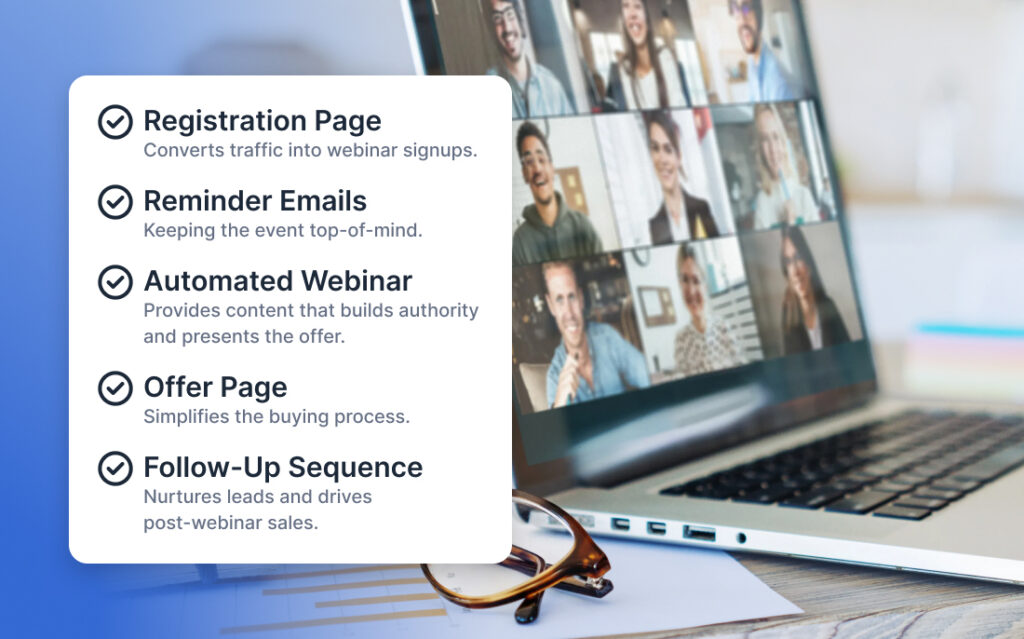
1. Registration Page
Your webinar registration page has one job: get people to sign up.
Keep the messaging clear and outcome-focused.
A strong landing page usually includes:
- A specific promise
- A simple registration form
- A clear call to action
- A short explanation of what attendees will learn
Avoid overloading the page with too much copy.
Clarity converts better than cleverness.
2. Confirmation and Reminder Emails
Most webinar attendees need reminders before they show up.
That’s why email automation matters.
A simple reminder sequence often includes:
- An instant confirmation email
- A reminder 24 hours before
- A reminder 1 hour before
- A final reminder 15 minutes before
These emails improve attendance rates and keep people engaged with your webinar marketing funnel.
3. Automated Webinar Presentation
Your webinar presentation should feel structured but natural.
Most high-converting webinars include:
- A strong opening hook
- Educational content
- Practical examples
- A case study or success story
- A transition into the offer
- A clear CTA
You don’t need a perfectly polished presentation.
You need useful content that solves a real problem.
For example, a business attorney could teach entrepreneurs how to avoid common contract mistakes before offering legal consulting services.
That kind of webinar builds authority without feeling overly sales-focused.
4. Offer Page or Checkout Page
After the webinar, attendees should have a clear next step.
Your sales page or checkout page should explain:
- What the offer includes
- Who it’s for
- What outcome it helps create
- How to get started
Keep the buying process simple.
Too many steps usually lower conversion rates.
5. Follow-Up Email Sequence
Most sales happen after the webinar ends.
That’s why your follow-up email sequence matters so much.
Good webinar follow-up emails can:
- Answer objections
- Share testimonials
- Send replay links
- Reinforce urgency
- Clarify the offer
This is where many webinar funnels either gain momentum or lose it.
Consistent follow-up helps nurture leads who need more time before buying.
Common Mistakes to Avoid When You Build an Automated Webinar Funnel
One of the biggest mistakes people make is overcomplicating the funnel.
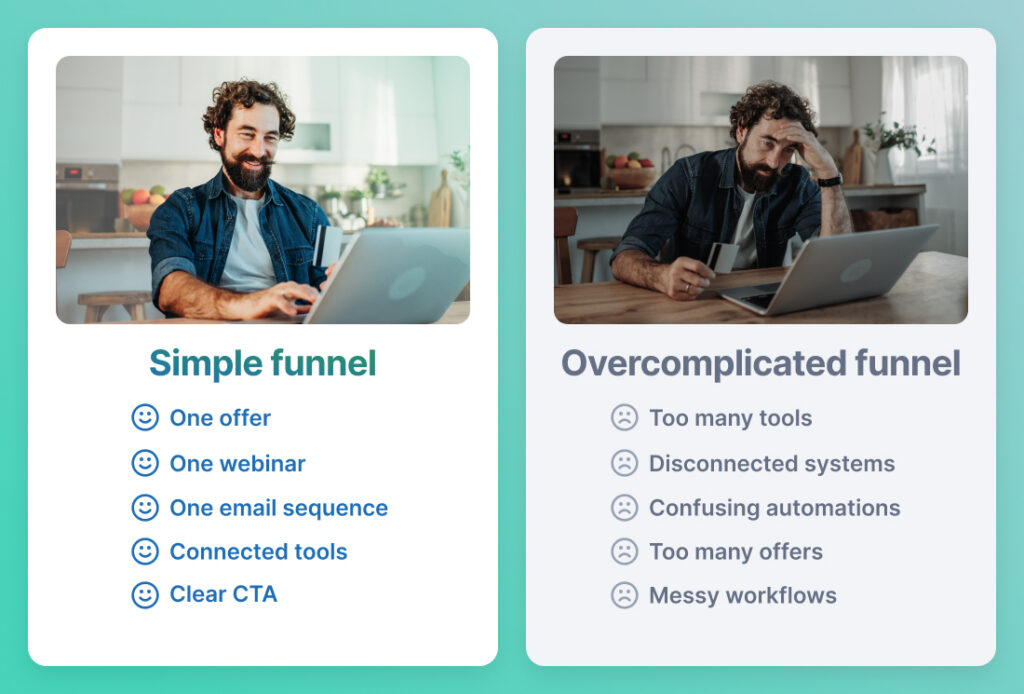
They stack together too many marketing tools, automations, and integrations before validating the basics.
A simple webinar funnel usually performs better than a confusing one.
Another mistake is focusing too heavily on software while ignoring messaging.
The webinar topic matters more than fancy design.
If your audience immediately understands the problem you solve and the transformation you help create, your webinar conversions improve naturally.
Perfectionism is another common roadblock.
Many experts delay launching because they think they need the perfect webinar script, the perfect funnel builder, or the perfect setup.
You don’t.
Start with a clear webinar strategy and improve it over time.
The Simplest Way to Build an Automated Webinar Funnel
The easiest way to reduce overwhelm is to use one connected webinar platform instead of piecing together multiple systems.
That’s why many coaches and consultants use WebinarJam and EverWebinar together.
You can manage:
- Webinar hosting
- Registration pages
- Reminder emails
- Webinar automation
- Webinar analytics
- Replay delivery
All in one workflow.
That simplicity matters when you’re already juggling clients, content, and business operations.
It also helps to focus on one clear offer first.
One audience. One webinar. One transformation.
For example, a leadership coach doesn’t need five webinar funnels.
They need one strong webinar that solves one important problem for one specific audience.
That’s enough to start building momentum.
Then you can optimize over time by improving attendance rates, testing webinar topics, refining your email sequence, and increasing conversions.
Build a Webinar Funnel That Supports Your Life, Not Just Your Revenue

A successful automated webinar funnel isn’t just about generating sales.
It’s about creating more breathing room in your business.
More consistency. More leverage. More freedom.
Instead of constantly trading hours for income, you start building systems that help your expertise reach more people without demanding more of your time.
That shift matters.
Because at some point, most experts stop asking, “How do I grow faster?”
They start asking, “How do I grow sustainably without losing my life in the process?”
An evergreen webinar funnel can help answer that question.
And when it’s built simply, it becomes more than a marketing system.
It becomes a business asset that keeps working while you coach, create, rest, and live.